Best Meal Prep Containers for Busy Families
The right container turns meal prep from a chore into a system. Here's how to choose containers that survive lunchboxes, dishwashers, and picky eaters.
 By MealWise TeamJuly 5, 20267 min read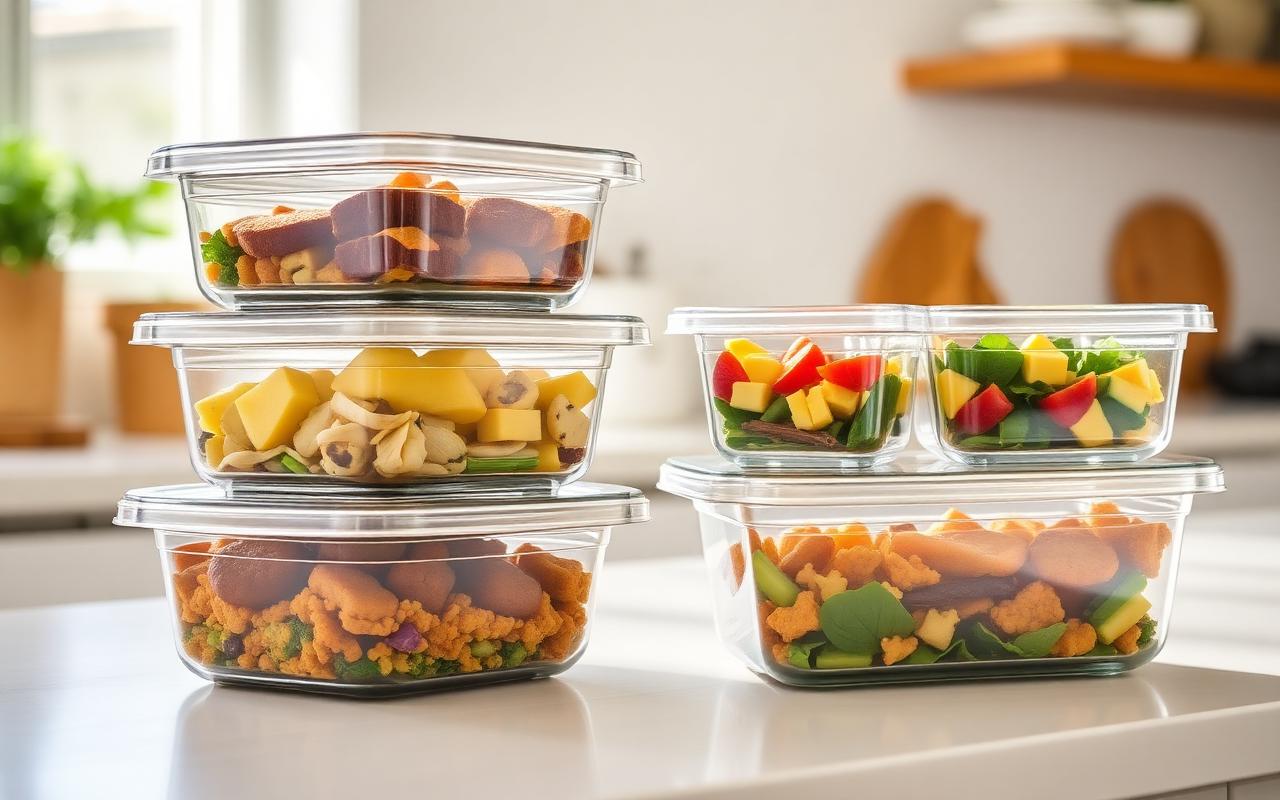
Meal prep only works if the containers work. The wrong lids leak in a backpack, the wrong shapes waste fridge space, and the wrong materials warp after two microwave runs. For busy families, containers are the quiet infrastructure that decides whether Sunday's plan actually reaches Wednesday's lunch.
This guide walks through what to look for, how many you actually need, and the trade-offs between the most common materials — so you can buy once and prep for years.
What makes a great family meal prep container
- Leak-proof lids with a real seal (not just a snap-on rim)
- Oven, microwave, freezer, and dishwasher safe
- Stackable, uniform shapes that don't waste fridge real estate
- Portion sizes matched to your household — kid, adult, and shared
- Clear sides so leftovers don't get forgotten
How many containers does a family actually need?
For a family of four prepping five weekday lunches plus two batch dinners, plan on roughly 20–25 containers in rotation. That covers meals in the fridge, meals in lunchboxes, and a small buffer for the ones inevitably left at school.
- 10–12 single-serve containers (24–32 oz) for lunches
- 4–6 divided or bento-style containers for kids
- 4–6 large containers (48–64 oz) for batch dinners and salads
- 2–4 small containers (4–8 oz) for dressings, dips, and snacks
Glass, plastic, or stainless steel?
Each material has a real job. Glass is best for reheating and long-term storage; BPA-free plastic wins for lunchboxes and travel; stainless steel is ideal for lunches you won't microwave. Most families end up with a mix — and that's the right answer.
Features that actually matter
Lid design
Four-latch locking lids with a silicone gasket beat snap-on lids every time. They survive a tipped-over lunchbox and don't loosen after 50 dishwasher cycles.
Portion control
Divided containers make portioning automatic — a protein well, a carb well, and a vegetable well. For weight management or steady energy through the afternoon, this alone can replace a food scale.
Stack geometry
Rectangular containers pack fridges 30–40% more efficiently than round ones. If you prep in bulk, this is the difference between a tidy fridge and a game of Tetris.
Common mistakes to avoid
- Buying a giant mixed set — you'll only use three sizes
- Choosing cheap plastic that warps in the microwave within a month
- Ignoring lid compatibility across sizes (matching lids save cabinet space)
- Skipping the small containers — dressings and dips get soggy without them
Conclusion
The best meal prep container isn't the most expensive one — it's the one your family will actually use every week. Start with a small, high-quality set in two or three sizes, add divided containers for the kids, and build from there as your rhythm settles.